Your Data Will Never Be Perfect. Use AI Anyway.
If you’re waiting for clean data before implementing AI, I have bad news: you’ll be waiting forever.
I’ve implemented Eloqua, Salesforce, and Marketo for companies with million-dollar MarTech budgets. Their data? Still messy. Daily duplicates. Inconsistent entries. Format chaos.
If enterprises with entire data teams can’t achieve perfect data, why are we holding Mike’s Auto Repair to a higher standard?
The dirty secret: the companies succeeding with AI aren’t the ones with perfect data. They’re the ones who stopped letting imperfect data paralyze them.
The Expensive Lie About “AI Readiness”
Every week, I hear from SMB owners who’ve been quoted thousands to “prepare their data for AI.” The consultants show them spreadsheets with customer names entered seventeen different ways. Invoice systems with three numbering schemes. Seven years of “we’ll fix it someday” compressed into Excel files.
The prescription is always the same: massive cleanup project first. Price tags in the thousands. Timelines stretching months.
They’re selling you a solution to the wrong problem.
Here’s what actually happens when SMBs try to “clean up first”:
- 10–15 hours/week: Time spent fixing instead of selling
- $2,000–$4,000/month: In missed opportunities while competitors move faster
- Your sanity: Because you’re fighting a battle that can’t be won
And while you’re standardizing customer names from 2019, your competitor just used AI with their garbage data to write a campaign that landed three of your clients.
Why Even Fortune 500s Can’t Win the Data Game
Back when I was implementing enterprise platforms, I watched something fascinating: companies would spend six months and six figures on data cleanup. Entire teams dedicated to deduplication. Consultants building pristine taxonomies.
Within 90 days? Chaos again.
Every. Single. Time.
Because here’s what nobody tells you: data entropy is real. The moment you finish cleaning, decay begins. New employees enter things differently. Customers provide variations. Systems hiccup.
If companies with dedicated analysts and million-dollar budgets are playing data whack-a-mole daily, what chance does a 20-person business have?
None. And that’s actually good news.
The Forward-Only Method (Or: How to Stop Playing Data Whack-a-Mole)
Here’s the playbook that actually works:
1. Make Peace with the Past (5 minutes) Stop cleaning old spreadsheets. “Smith Construction” vs. “Smith Construction Inc.”? Leave them both. That 2018 inventory file? Close it. History doesn’t sell.
2. Build Digital Bouncers (2 hours/week) Rules at the door prevent new messes:
- Customer names = dropdown, not free text
- Invoice numbers = auto-generate
- New product codes = standardized
- Emails = validated on entry
3. Put AI to Work Now AI doesn’t need your legacy chaos to deliver value. Use it today to:
- Write emails and social posts
- Draft quotes and proposals
- Answer customer questions
The Only Three Data Fixes Worth Your Time
Everything else can wait. These three are non-negotiable:
1. Active Customer Payment Info
- Scope: Customers who’ve paid you in the last 6 months
- Time investment: ~3 hours
- Why: If money is on the line, the record must be clean
2. Top 20% Revenue Drivers
- Scope: Products, services, or clients that generate 80% of revenue
- Time investment: ~2 hours
- Why: Clean data where it makes you the most money
3. This Month’s Active Leads
- Scope: Anyone who’s engaged in the last 30 days
- Time investment: ~1 hour
- Why: Dead leads don’t need clean records—active ones do
What This Looks Like in Real Business
Here’s the uncomfortable truth: even Fortune 500s with million-dollar MarTech budgets and teams of analysts can’t keep their data pristine. McKinsey’s 2025 State of AI report shows adoption is highest in marketing, sales, and service operations—functions where speed beats perfection. That’s why the most successful companies focus on building guardrails for incoming data, not scrubbing the archive.
MIT Sloan calls this the “small-t transformation”: narrow use cases, targeted rules, and quick wins that build momentum. Deloitte echoes it—warning that the value of generative AI is unlocked not by heroic cleanup projects, but by addressing the handful of obstacles that matter (like validating inputs and setting standards for new records).
And the numbers back it up. Salesforce’s 2025 SMB survey found that 91% of small businesses using AI say it boosts revenue. Reuters reports IBM cut marketing cycles from two weeks to two days by dropping AI into workflows, while Klarna shaved $10 million a year off its marketing costs with generative imagery and copy. Not a single one of those outcomes depended on perfect legacy data—they depended on forward-only fixes and pragmatic adoption.
Even the skeptics agree. Axios notes many organizations still struggle to see immediate ROI, and The Information warns that most companies are still in the “narrow use case” phase. But that’s not an argument for waiting; it’s a reminder that starting small, now, is the only way to climb the curve.
The pattern is clear across industries and company sizes: progress comes from moving forward with guardrails, not chasing a fantasy of historical perfection.
The Uncomfortable Truth About Your Competition
While you’re still wrestling spreadsheets into shape, the business down the street is already putting these lessons into practice. They’re running Salesforce-style quick wins, trimming cycles like IBM, or finding efficiency gains like Klarna. They’re not perfecting their data—they’re testing AI, learning what works, and getting better every week.
Perfect data tomorrow can’t compete with good-enough AI today.
The Permission Slip You’ve Been Waiting For
Here it is, signed by someone who’s implemented enterprise marketing systems and lived to tell the tale:
Your data will never be perfect. Stop pretending it needs to be.
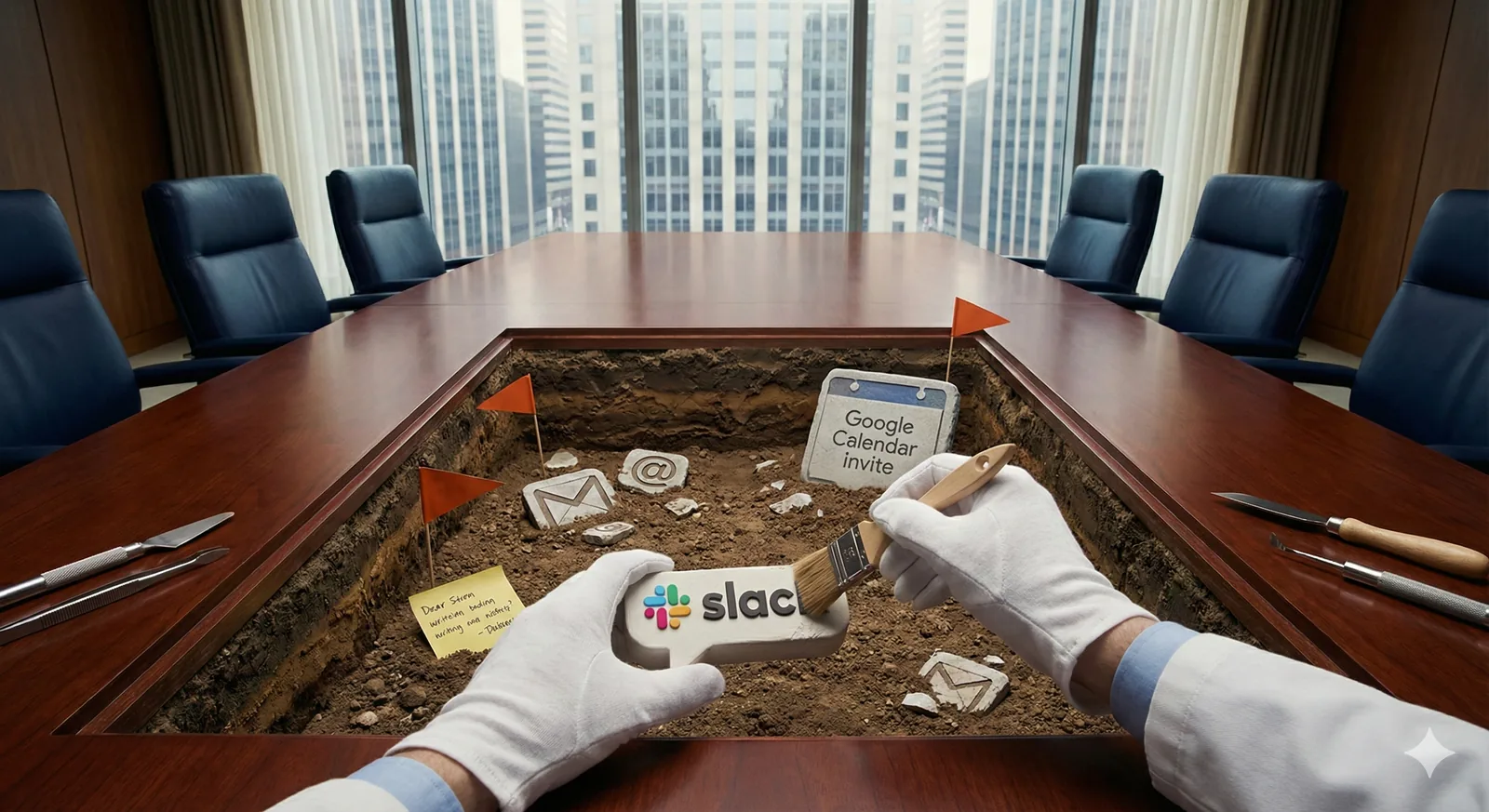
Every hour you spend on data archaeology is an hour not spent on:
- Talking to customers
- Testing that new marketing channel
- Improving your service
- Having dinner with your family
The companies I’ve seen fail weren’t the ones with messy data. They were the ones who never started because their data wasn’t “ready.”
Even the research agrees: Salesforce shows small businesses with AI adoption are already pulling ahead. MIT Sloan and Deloitte show the path is forward-only governance, not backward cleanup. McKinsey shows the fastest adoption is happening in functions where messy data is the norm. And Axios reminds us: waiting doesn’t reduce risk, it just delays learning.
Your Monday morning action plan writes itself:
- 8:00 AM: Pick your biggest data pain point (just one)
- 8:30 AM: Build one rule to prevent it happening again
- 9:30 AM: Start using AI for something that doesn’t need your data
- 10:00 AM: Get back to running your actual business
Perfect data is always six months away. Six months from now, it still will be.
Stop cleaning. Start preventing. Ship anyway. Your business can’t afford to wait.
Sources
- McKinsey, The State of AI in 2025 – https://www.mckinsey.com/capabilities/quantumblack/our-insights/the-state-of-ai-in-2025
- MIT Sloan Management Review, Finding Value in Small-t Transformations – https://sloanreview.mit.edu/article/finding-value-in-small-t-transformations
- Deloitte, Engineering for Generative AI – https://www2.deloitte.com/insights/us/en/focus/tech-trends/2025/engineering-for-generative-ai.html
- Salesforce, SMBs and AI: Trends for 2025 – https://www.salesforce.com/news/stories/smbs-ai-trends-2025
- Reuters, IBM Uses Adobe GenAI to Cut Marketing Cycles – https://www.reuters.com/technology/ibm-uses-adobe-genai-marketing-2024-04-10/
- Reuters, Klarna Saves $10M Annually on Marketing with GenAI – https://www.reuters.com/business/finance/klarna-saves-10m-genai-marketing-2024-06-05/
- Axios, Why Many Firms Still Struggle to See AI ROI – https://www.axios.com/2024/07/15/generative-ai-roi-business
- The Information, AI Executive Survey 2025 – https://www.theinformation.com/articles/ai-executive-survey-2025