
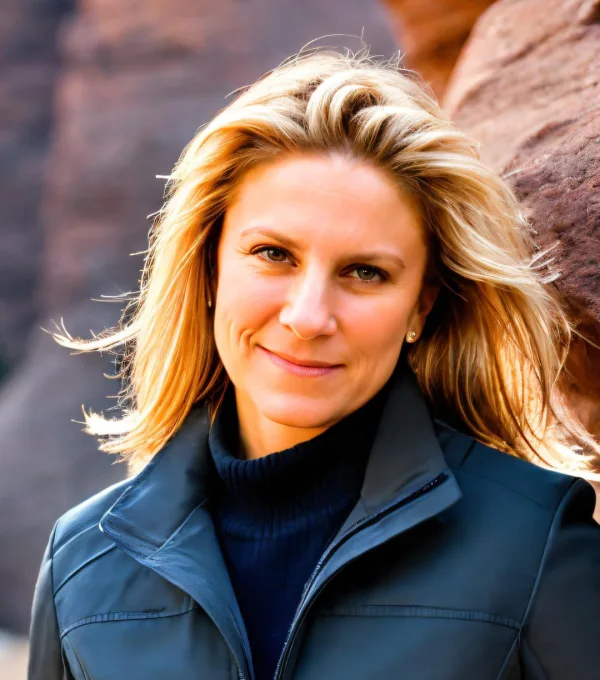
Melissa Kolbe
Founder, Pallas Advisory. Utrecht, Netherlands.
Most companies slap AI on top of a process that was already broken. They still have to keep the lights on, nobody has the bandwidth to run both, and the AI quietly falls to the side. I started Pallas Advisory because the fix was never the tool. It was taking a moment to rethink how the work gets done.
Where the judgment comes from
Before this I spent fifteen years in the plumbing of enterprise marketing operations, the person who figures out why the CRM isn't syncing, why the attribution numbers don't match, and why the automation that was supposed to save time is creating more work than it eliminates.
At RingCentral I ran the marketing attribution and measurement systems inside Salesforce for seven years while the marketing organization grew from a handful of people to more than a hundred. I left corporate to do the same work for small and mid-sized businesses, mostly because I like finishing things, and in the enterprise world that feeling is rare. I run Pallas Advisory from Utrecht as an American on the DAFT, the Dutch-American Friendship Treaty.
Between two departments
What I do now sits between two departments that rarely sit down together. Marketing needs something built. IT has its own list and its own reasons. I can hold both sides, and I'm hands-on in the build.
How I work
Assess, rethink, build.
Same rules every time, never the same build.
- I start at the friction, usually wherever someone is cutting and pasting between two systems.
- I look at the workflow before the tool and the tool before the hire, and sometimes the answer is that you don't need me.
- What gets built sits in a database you own, next to the software you already run, not inside it.
- A person on your team stays in the decisions, because adoption is the hard part and it's human.
- Whoever runs it, you own it. Your team runs it, or I keep it running so nobody on your team has to be IT. Either way it's documented, and that's a choice, not a dependency.
The first thing I hand you is an assessment: the workflows mapped, the decision logic pulled out of the manual steps, and the handful of things worth automating, with what each would take. Sometimes that assessment is the whole engagement.
Work I've built
- An attribution system, for a global multi-brand B2C company: executive return-on-ad-spend reporting six weeks after kickoff, on a database they own.
- A content engine, for a content operation I run: every reviewer correction becomes a rule for the next draft.
- An operational automation, for a relocation coaching business: a first draft of every client's roadmap is ready about two minutes after intake.
Who I bring in
I lead every engagement, and I'm the one accountable to you for the whole of it. On bigger builds, I bring in data architects and analysts I've worked with for years, so the work scales without changing who answers for it. When a project needs a skill I don't have, like deep marketing automation platform work, I bring in a specialist for that too.
What I won't do
I won't build something you can't run without me. I won't put your data inside a vendor's system so that it's theirs. I won't automate a process nobody has looked at first. I'll set up your intake, your outbound and your reporting so your team runs them, not me. And if the right answer is a hire, a different tool, or nothing, I'll say so.
I lead a small number of engagements at a time. That's deliberate: whoever else works on your project, you get me, not a junior team I hand you to, and every engagement I add is less of me for the others. It also means I say no to projects that aren't a good fit. If I'm not the right person for what you need, I'll tell you and point you toward someone who is.
Monthly AI Roundtable
A show-and-tell with technical and business people sharing what they're building, learning and trying. Informal, no presentations required, always free.