
Week 1: Understanding the Stakes Before Implementing Your AI Visibility Strategy
TL;DR
- AI-driven search is rapidly replacing traditional search engines, with 27% of Americans already using AI chatbots instead of Google and a projected 25% drop in traditional search volume by 2026
- Early adopters are seeing measurable results: 91% of SMBs using AI report revenue increases, with documented cases of 50% visibility increases and 20% sales growth
- Businesses must optimize for AI visibility differently than traditional SEO, focusing on comprehensive content, expert authority, and structured data rather than keywords
- Take immediate action with five specific steps you can implement within two weeks to start capturing AI search advantages before competition intensifies
A Personal Note
As I’ve researched the rapidly evolving AI search landscape, I’ve become convinced that this represents the next major shift in digital visibility. That’s precisely why I’m launching this series now: to help all of us get ahead of this trend before it becomes an urgent concern. Through Pallas Advisory, I plan to implement these exact strategies, documenting the journey and sharing real results throughout this series.
This intersection of AI and search is precisely why I founded Pallas Advisory—to help businesses navigate technological shifts by turning complex developments into practical strategies. My research suggests AI search optimization will become essential within the next 12-18 months, and by exploring and implementing these approaches now, I’m staying true to my mission of helping businesses stay ahead of technological curves rather than scrambling to catch up.
The Immediate Urgency of AI Search Adoption
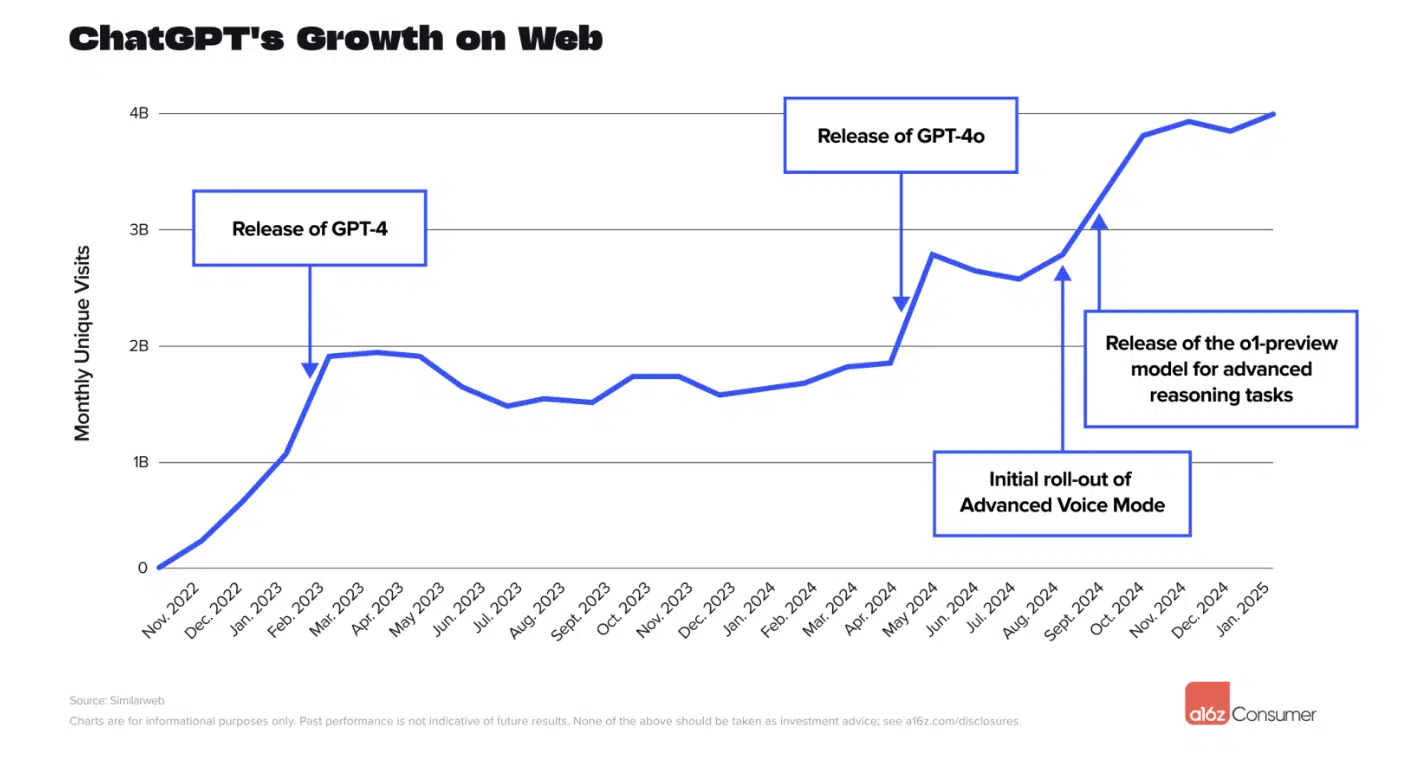
The statistics are compelling: ChatGPT’s user base has expanded to 400 million weekly active users by February 2025. This surge isn’t limited to tech enthusiasts—it signifies a fundamental shift in how your customers seek solutions.
Consider these market signals:
- 27% of Americans have already abandoned traditional search engines in favor of AI chatbots²
- 67% of consumers report they’re likely to use ChatGPT instead of Google to find information³
- Gartner predicts traditional search volume will drop 25% by 2026 as users shift to AI assistants⁴
- Among high-growth SMBs, 83% are already leveraging AI technology compared to just 55% of declining businesses⁵
“The data is clear: those who wait too long to invest in AI risk falling behind as early adopters build their advantage.” — Salesforce Small Business Trends Report⁵
For SMBs and marketers, this isn’t about future-proofing—it’s about current survival and competitive advantage. While your competitors are optimizing for AI visibility, can you afford to remain focused solely on traditional search?
Strategic Business Impact: Real Numbers, Real Results
📈 The Advantage of Early Adoption
An overwhelming 91% of SMBs currently using AI report revenue increases directly attributed to their AI investments⁵. This isn’t coincidence—it’s competitive advantage in action.
How exactly are these businesses benefiting?
- New customer acquisition channels: Nearly 3 in 5 consumers now use AI tools rather than search engines when researching products and services⁶.
- Outsized visibility for smaller players: AI search often recommends the best answer, not just the biggest brand—creating opportunities for SMBs with specialized expertise to outperform larger competitors.
- Marketing efficiency multipliers: Businesses leveraging AI for content creation report a 72% increase in content output while experiencing a 56% boost in organic traffic⁷.
My Approach: Over the next month, I’ll be applying this exact framework to Pallas Advisory’s digital presence. I’ve already begun auditing our content through the lens of AI discoverability and identified several immediate opportunities. As I implement these changes, I’ll be tracking and sharing the outcomes in future installments of this series—creating a real-time case study we can all learn from.
📉 The Measurable Cost of Inaction
The flip side reveals equally compelling evidence of what happens when businesses fail to adapt:
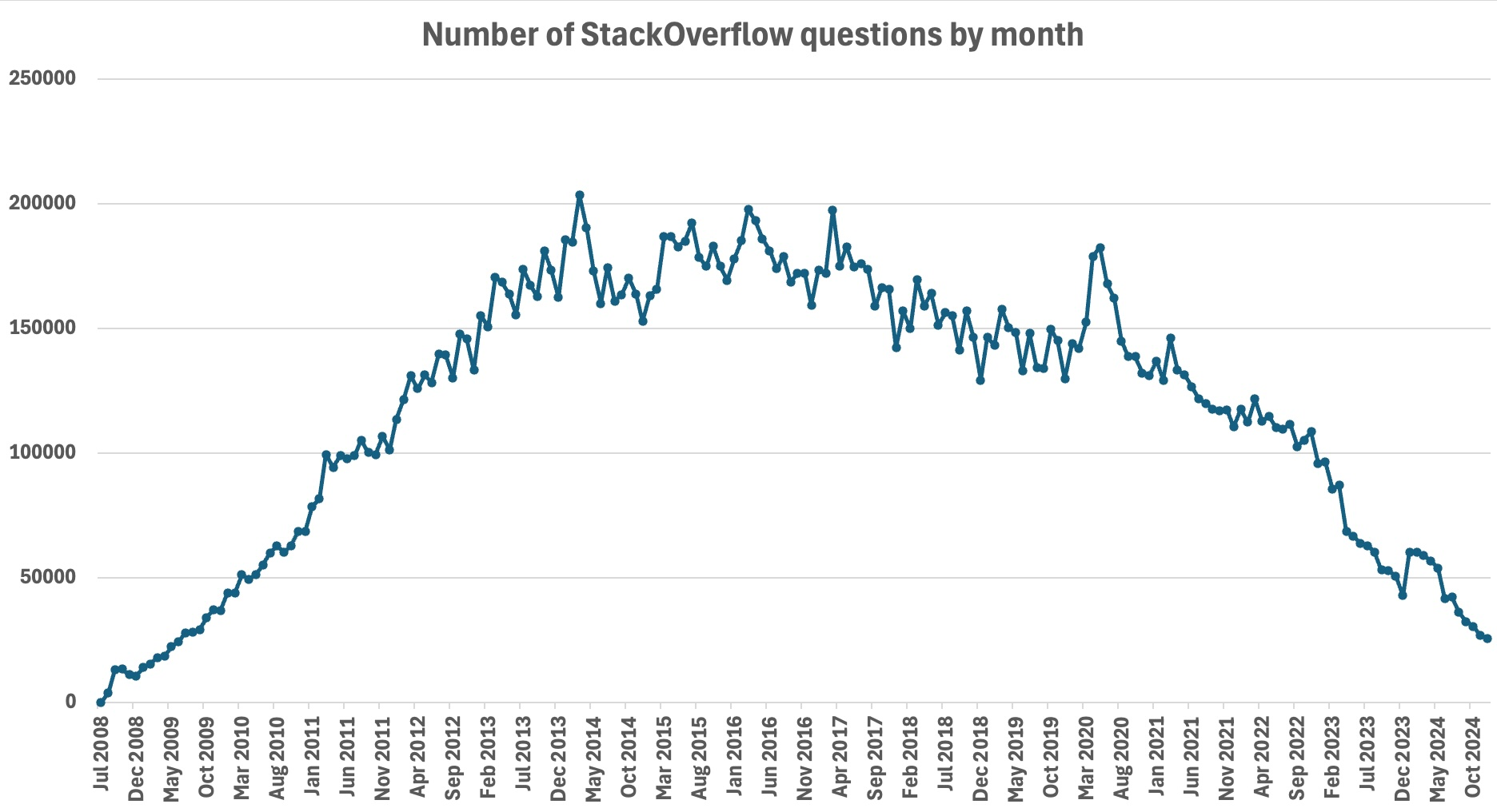
Look at Stack Overflow—a platform that dominated programming Q&A for years. After ChatGPT launched, new questions on their platform plummeted by 75%⁸. Users who once generated page views now get immediate answers from AI—with no clicks to any website.
This pattern is repeating across industries as consumers shift their behavior. Traditional search requires multiple website visits and click-throughs while AI search delivers comprehensive answers directly. In traditional search, 10 results compete for attention; in AI search, only 1-3 sources get mentioned.
Boston Consulting Group research reveals that only 26% of companies have developed the capabilities to effectively leverage AI⁹. The rest are falling further behind with each passing month.
Consumer Search Behavior: The Transformation Is Happening Now
Your customers aren’t waiting for businesses to catch up—they’re already changing how they search.
AI search delivers what users want: natural language questions, direct answers, synthesized information, and conversational responses. This shift is most dramatic among younger demographics:
- Two-thirds of Millennials and Gen Z have already switched from Google to AI chatbots for product research⁶
- 60% of these younger users trust ChatGPT’s answers more than Google’s for explanatory questions¹⁰
“When consumers can ask a question and get a direct answer without scrolling through multiple websites, why would they go back to the old way of searching?”
If your marketing strategy still revolves primarily around ranking in Google’s “10 blue links,” you’re increasingly invisible to a growing segment of potential customers who now turn to AI for answers and recommendations.
Why I’m Prioritizing AI Search Optimization
My research has made it clear this is the direction digital discovery is heading. That’s why I’ve developed a three-phase implementation plan for Pallas Advisory:
- Initial audit and baseline establishment (in progress)
- Content restructuring and technical implementation (starting next week)
- Measurement and refinement (ongoing, with results shared in this series)
By taking this journey ahead of widespread market demand, I’ll be better positioned to guide clients through the transition when AI search becomes a priority for their businesses. The strategies I’m outlining in this series aren’t just theoretical; they’re the exact steps I’m preparing to implement.
How AI-Driven Search Fundamentally Changes the Game
In AI search, content quality and depth matter far more than keyword density or exact match phrases. The AI doesn’t just match words—it understands concepts and evaluates which sources provide the most valuable information.
Traditional Search vs. AI-Driven Search:
- Keyword optimization → Context and topic authority
- Backlink quantity → Information quality and trustworthiness
- Technical SEO factors → Comprehensive answers to user intent
- Competing for page 1 ranking → Competing to be the cited source
Analysis of real AI chatbot referral patterns reveals critical insights:
- 77% of all AI referrals go to informational content like guides and in-depth articles¹¹
- Product pages receive less than 0.5% of AI referrals¹¹ unless they contain substantial educational content
- 84% of current AI referrals are to finance-sector content¹¹—likely because these sites invest heavily in authoritative information
Perhaps most importantly, AI search creates a fundamentally different competitive landscape. In traditional search, ranking #4 or #5 still drives significant traffic since users see multiple results. In AI search, the AI often presents one synthesized answer using 2-3 sources at most. If you’re not one of those sources, you get zero visibility.
Real-World Success: SMBs Gaining Advantage Today
Sew Generously Bespoke, a Seattle-based tailor shop, provides a concrete example of how even local brick-and-mortar businesses can benefit from AI search optimization.
Their digital marketing agency implemented a strategy focused on making the business visible in AI-powered search results. They ensured the tailor shop was well-represented across the web and maintained consistent information that AI systems could access.
The results were measurable and direct: In December 2023, a customer walked into the shop stating they found the business through ChatGPT. When this customer had asked ChatGPT for a “high-end tailor,” the AI specifically recommended Sew Generously Bespoke by name.¹²
The shop owner provided a testimonial confirming the success: “We are very happy. [Logic Inbound is] always looking for improvements.”¹² The agency now treats “Ranking in ChatGPT” as an ongoing goal for the client.
This case illustrates that optimizing for AI search can directly translate into real-world leads and sales. For a small local business, capturing tech-savvy customers via AI recommendations represents a new competitive advantage.
Future Predictions: The AI Search Timeline
Industry experts and market signals point to a clear evolution of AI search over the next three years.
Next 12 Months: Mainstreaming of AI Search
- Google’s Search Generative Experience (SGE) to fully roll out
- Microsoft’s Bing Chat to gain market share through Windows/Office integration
- Major e-commerce platforms to integrate AI shopping assistants
- Adoption accelerating with 79% of consumers planning to use AI-enhanced search⁴
Year 2-3: Market Maturity
- Industry-specific AI assistants emerging in healthcare, education, and service sectors
- Traditional search traffic declining by up to 30-50% as AI becomes default
- New marketing roles focused on “AI Search Optimization” becoming standard
- Cost to establish AI visibility increasing substantially
Gartner predicts that by 2028, organic search traffic could decline by 50% or more as consumers fully embrace AI-powered search⁴.
For SMBs, this timeline presents a clear message: The competitive advantage of early adoption is available now but will diminish rapidly as AI search becomes mainstream.
Your AI Search Success Framework
Successfully adapting to AI-driven search requires a systematic approach with four key pillars:
- Content Excellence: Comprehensive topic coverage, expertise signals, and critical content gaps
- Technical Foundation: Schema markup, mobile optimization, page speed, and structured data
- Authority Building: Brand monitoring, knowledge graph presence, and expertise demonstration
- Measurement Systems: AI referral tracking, baseline metrics, and ROI calculation
From assessment to action, a successful AI search strategy follows a progressive process of understanding your current readiness, identifying opportunities, creating an action plan, implementing improvements, and measuring results.
“Despite widespread interest in AI, only 26% of companies have built the capabilities needed to generate tangible value beyond isolated experiments.” — Boston Consulting Group⁹
Your Immediate Action Plan: Five Steps You Can Take This Week
While comprehensive optimization takes time, these five high-impact actions will jumpstart your AI search readiness:
1. Experience AI Search as Your Customers Do (Today)
Ask ChatGPT, Perplexity, and Google’s SGE the questions your customers commonly ask and see whether your business or competitors appear in the responses.
2. Audit Your Most Valuable Content Pages (Days 1-3)
Examine your highest-traffic pages through the lens of AI search, checking for comprehensive answers, clear structure, and expertise signals.
3. Implement Quick Technical Wins (Days 4-7)
Add FAQ schema markup, ensure your sitemap is current, fix mobile usability issues, and improve page load speed.
4. Create One Piece of AI-Optimized Content (Week 2)
Develop a single piece of content specifically designed for AI visibility on a high-value customer question.
5. Establish Your Measurement Baseline (Week 2)
Begin tracking your AI search performance and documenting competitor visibility in AI responses.
My Commitment: These five steps aren’t just recommendations—they’re the exact actions I’m taking over the next two weeks for Pallas Advisory. I invite you to implement them alongside me, and I’ll be sharing my preliminary findings in next week’s installment.
Conclusion: Will You Lead or Follow in the AI Search Revolution?
AI-driven search isn’t a distant future trend—it’s actively reshaping how your customers find businesses today. By 2026, traditional search could lose 25% (if not more) of its volume to AI alternatives⁴.
Those who act now will capture market share while competition is limited, establish valuable AI visibility, and drive revenue growth. Those who delay will face declining visibility, higher competitive costs, and potential revenue decline.
Unlike previous digital revolutions that favored large enterprises with massive resources, AI search optimization currently rewards expertise, quality, and adaptability—areas where nimble smaller businesses can excel.
Throughout this series, I’ll be transparently sharing my implementation process, results, challenges, and refinements as I apply these strategies to Pallas Advisory.
The window for early advantage is open now, but it won’t stay open long. The businesses that adapt quickly will write the success stories others will read about in 2026.
Which side of this divide will your business be on?
Next week, we’ll dive deeper into the mechanics of how platforms like ChatGPT and Perplexity actually rank and select content, giving you even more specific strategies for optimization.
Stay ahead of the AI curve by subscribing to the weekly “AI Strategist” newsletter for practical insights on leveraging AI in your marketing operations.
Want to talk through your version of this? Email me.
Further Reading & Sources
- Business Insider (2025). “ChatGPT isn’t slowing down Google just yet, and these numbers prove it.” March 5, 2025.
- TechRadar (2023). “People are increasingly swapping Google for the likes of ChatGPT, according to a major survey—here’s why.“
- CDO Times (2024). “Over 75% of consumers are concerned about misinformation from artificial intelligence.” March 19, 2024.
- Search Engine Land (2024). “Search engine traffic predictions for 2026.“
- Salesforce (2025). “AI trends among SMBs: What to expect in 2025.“
- Customer Experience Dive (2025). “Generative AI and social media dominate purchase decisions.“
- Boston Consulting Group (2024). “AI adoption in 2024: 74% of companies struggle to achieve and scale value.” October 24, 2024.
- DevClass (2025). “Coding help on StackOverflow dives as AI assistants rise.” January 8, 2025
- GitHub Gist (2024). “AI tools and resources compilation.“
- Search Engine Journal (2024). “Study: ChatGPT & AI tools gain ground in search market.“
- McKinsey & Company (2024). “The state of AI in early 2024.” May 30, 2024.
- Logic Inbound (2024). “Sew Generously Bespoke: A case study.“
- Synthesia (2024). “Cphnano increased SEO by 50%.“
- Cubeo AI (2025). “Case study: How Soltzu reduced content creation by 4x, increasing client engagement by 30%.” January 10, 2025.
- Microsoft (2024). “A strategic approach to assessing your AI readiness.” November 6, 2024.
- Moberg Analytics (2023). “Delayed knowledge in neurocritical care.” June 5, 2023.