
Why your everyday communication skills are your biggest AI advantage.
I vividly remember my first time interacting with ChatGPT. I was in the midst of what we all know as a “fire drill”—one of those urgent tasks that lands on your desk, and everyone needs it done yesterday. The task? Defining organizational roles succinctly for a senior executive, specifically roles like “Product Manager” and “Demand Generation Lead.” Summarizing them quickly and clearly felt daunting. Turning to ChatGPT, I was amazed when, within moments, it provided clear, concise definitions exactly as needed. Prompt engineering suddenly didn’t feel like engineering at all; it felt like a natural conversation.
Here’s the thing: As someone with a journalism and communications background, I quickly realized prompting an AI isn’t coding—it’s communicating clearly and strategically.
The Myth of Complexity
In talking to clients and friends interested in AI, I’ve noticed a common theme: people often believe prompt engineering is complicated and requires advanced technical skills.
In reality, it’s simpler:
- Myth: Prompt engineering requires technical skills.
- Reality: Clear, strategic communication is all it takes.
Recent studies reflect this perception gap clearly: 90% of small- and medium-business leaders know about AI tools like ChatGPT, yet only 26% actively use them. They mistakenly believe it’s overly technical—it’s not.
Why a Communications Background Makes AI Less Intimidating
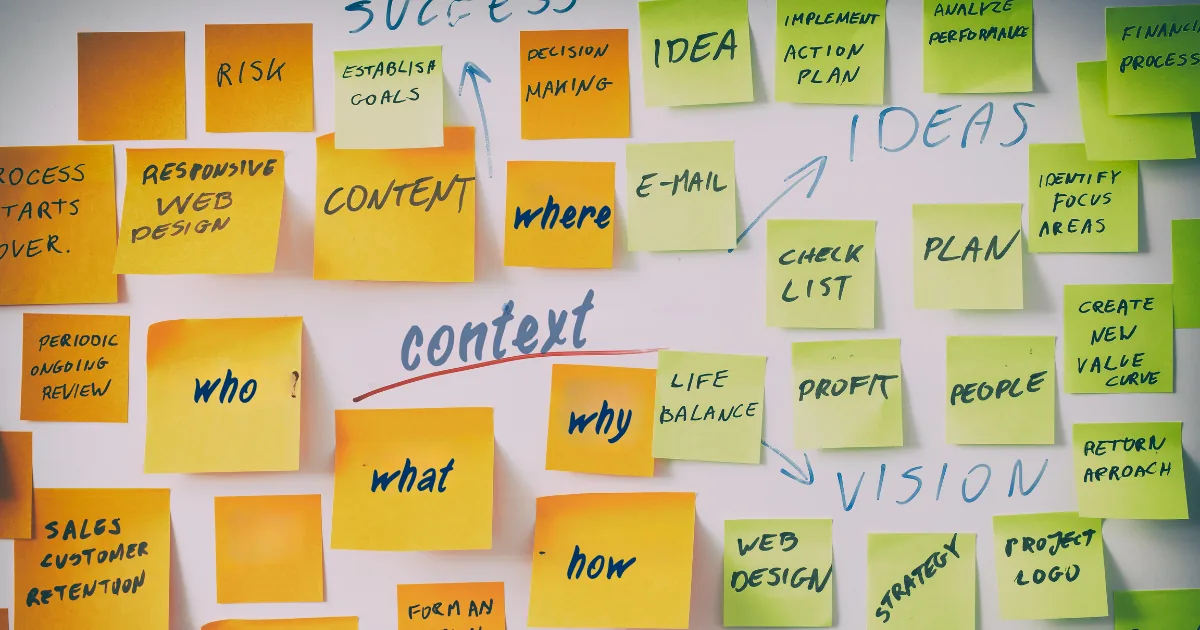
My journalism background revolves around the “Who, What, Where, When, Why, and How” framework. These are the exact elements that create effective prompts.
When prompting ChatGPT, I naturally employ these skills—clarity, specificity, and purpose. Prompting effectively is just like writing a concise, clear news story. This natural alignment makes AI intuitive rather than intimidating.
But you don’t need a journalism or communications degree to excel at prompting AI. Anyone with good communication skills can thrive. If you’re skilled at clearly conveying your ideas, asking insightful questions, and understanding your audience’s needs, you’re already primed for success with AI tools like ChatGPT. Clear communication is universally accessible, meaning AI’s benefits aren’t limited to technical experts or coders—they’re available to anyone willing to engage thoughtfully.
My “Aha Moment”: Understanding Prompt Engineering’s True Power
A key moment for me was when I was creating an AI-driven research framework for a sales team bogged down by manually researching prospects, company backgrounds, and competitive insights. Understanding their struggles, I crafted a reusable AI prompt that automated this research, cutting prep time by 25–30%.
This wasn’t complex coding; it was clearly communicating the team’s needs, goals, and challenges to the AI. The productivity leap came from clear and purposeful communication, not tech wizardry.
Context: Your Secret Weapon
The real secret to prompt engineering? Context. Imagine dropping someone into a conversation midstream without any background information—confusing, right? ChatGPT feels the same way without proper context.
Good context includes:
- Clearly stating your task or goal.
- Providing relevant background information.
- Specifying desired outcomes or formats.
Without context, AI provides generic outputs. With proper context, ChatGPT transforms from novelty to essential productivity partner.
Real-world Success: Practical Examples
Let’s revisit that sales team scenario. By understanding their workflow and pain points, I gave ChatGPT detailed context to consistently deliver useful, actionable research. The result? Reduced manual effort, boosted productivity, and improved morale. No coding needed—just clear, strategic prompting.
This same approach works across a range of everyday small business tasks. Here are a few examples of how providing better context turns AI from a novelty into a practical tool:
Customer Support: Faster, More Empathetic Responses
A retail manager was drowning in customer emails. She wanted to use AI to draft replies but found the responses bland and impersonal.
| Before (Vague Prompt): “Write a reply to a customer asking about a late order.” |
| After (With Context): “Write a professional but empathetic email to a customer asking about a delayed shipment. The order was placed 10 days ago, delayed due to a supplier issue, and will arrive in 3 days. Keep the tone friendly and offer a 10% discount code for the inconvenience.” |
**Outcome:**Customer replies were faster, clearer, and felt more personal. It saved the manager hours each week—and customer satisfaction scores went up.
Social Media Marketing: Content That Converts
A yoga studio owner wanted to promote her new beginner class but struggled to get AI to generate content that actually resonated with her audience.
| Before (Vague Prompt): “Write a post to promote a yoga class.” |
| After (With Context): “Write a warm, encouraging Instagram caption promoting our 6-week beginner yoga series starting September 15. It’s designed for people new to yoga or who feel intimidated by traditional studios. Use an inclusive tone and include 3 relevant hashtags.” |
**Outcome:**The result sounded like her and spoke directly to her ideal client. Engagement on the post more than doubled—and registrations for the class spiked within 48 hours.
Operations: Faster Internal Documentation
A restaurant manager needed a reliable checklist for closing staff—but the AI kept giving generic content that didn’t reflect her specific workflow.
| Before (Vague Prompt): “Write a checklist for restaurant staff.” |
| After (With Context): “Create a detailed end-of-day checklist for a casual dining restaurant. Include tasks like sanitizing surfaces, restocking the fridge, counting the till, locking up, and setting the alarm. Make it print-ready and friendly in tone.” |
**Outcome:**Instead of spending two hours drafting it, she had a usable checklist in five minutes—one her team now uses daily without confusion or missed steps.
These examples all show one thing: AI is only as helpful as the context you provide. When you’re vague, it’s vague. But when you communicate clearly—who it’s for, what it needs to do, how it should sound—you get responses that are actually useful.
And this isn’t about learning to code. It’s about refining how you communicate what you already know. The better your input, the more valuable the output.
Practical Advice for Beginners: Use AI Purposefully
If you’re hesitant to explore AI due to perceived complexity, here’s my best advice: Use AI purposefully, not for its own sake. Clearly identify a real pain point or challenge first.
Try this:
- Clearly define your problem in two sentences.
- Identify three critical pieces of context.
- Prompt ChatGPT accordingly.
For complex tasks, let AI help you help it. If you clearly understand the context—the who, what, where, why, and how—ask ChatGPT to draft a prompt tailored to your goals. This is exactly how I handle complicated challenges, and it streamlines the process tremendously.
You’ll be amazed at what clear context achieves.
Final Thoughts
You don’t need coding skills or deep technical knowledge to start benefiting from AI today—you just need clear communication and thoughtful context. The same skills you already use every day are exactly what makes AI prompting powerful and intuitive.
But I understand how challenging it is for small businesses to explore something new while keeping up with day-to-day responsibilities. If you’re feeling stuck between the work you have to do and the innovations you’d love to pursue, that’s exactly where Pallas Advisory comes in. I specialize in helping businesses bridge that gap—simplifying AI adoption and prompt engineering so you can quickly see meaningful improvements without disruption.
So, what’s one specific task currently draining your time and energy, where clearer communication with AI could immediately make a difference?
Your next productivity leap might be closer—and simpler—than you think.
Sources & Further Reading
- AllBusiness.com. (2024). 3 ways to use AI for business growth in 2024. Retrieved fromhttps://www.allbusiness.com/ai-and-business-development-for-smbs
- Adami, V. (2023). Prompt engineering: A communication skill, not a coding one. LinkedIn. Retrieved fromhttps://www.linkedin.com/pulse/prompt-engineering-communication-skill-valentina-adami-ygtlf
- Business Insider. (2023). Prompt engineering is no different from human communication, OpenAI employee says. Retrieved from https://www.businessinsider.com/openai-worker-training-ai-prompt-engineer-no-different-human-communication-2023-12
- Lifewire. (2024). Stop overthinking AI prompts—it gets what you mean now. Retrieved from https://www.lifewire.com/stop-overthingking-ai-prompts-11731143
- Humanloop. (2024). AI is blurring the lines between PMs and engineers. Retrieved from https://humanloop.com/blog/ai-is-blurring-the-lines-between-pms-and-engineers